
#8 in Fantasy
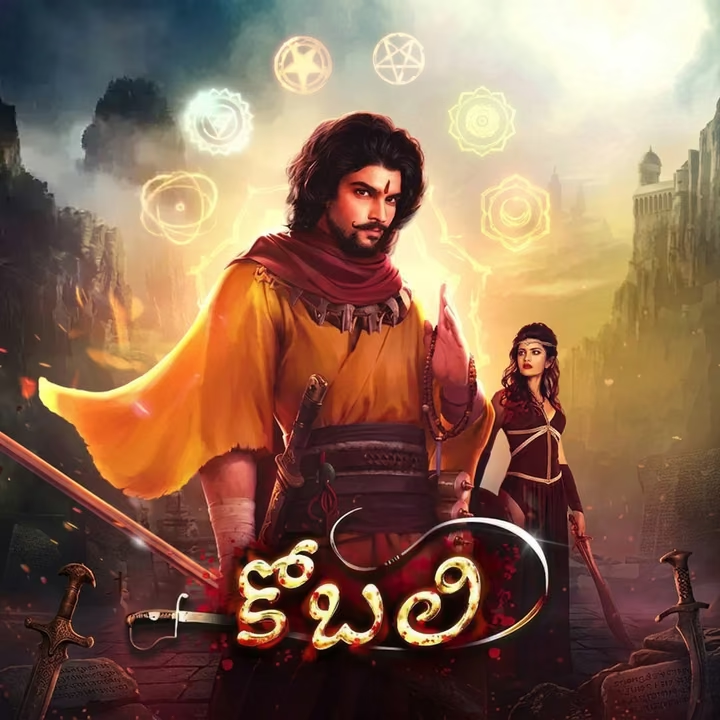
Kobali
Adapted By - Babu||Rudra lost his family under mysterious circumstances in his childhood. Now he must become a warrior to unearth the truth, but whom should he trust..? Leelavathi, his....
Adapted By - Babu||Rudra lost his family under mysterious circumstances in his childhood. Now he must become a warrior to unearth the truth, but whom should he trust..? Leelavathi, his love of life, betrays him, Rudra doesn't know who his father and his mother are. Will he survive in the fight of survival and rule the kingdom..? || Content Team : Janardhan, Sr Creative Lead : Gopal Adusumalli
- E1. Rudrajalam
- E2. Soundarya Rasi
- E3. Dragon Veerudu
- E4. Letha Praayam
- E5. Chali Lo
- E6. Kaama Pisaachi
- E7. Kaadambari
- E8. Gelupu Evaridhi?
- E9. Aata Modhalu
- E10. Ranarangam
- E11. Rendo Dasha
- E12. Maha Sangramam
- E13. Ni Kuturu Naku Vaddu
- E14. Bhairava
- E15. Amma Nanna Ekkada..?
- E16. Maradalu Pilla
- E17. Parvatha Hastam
- E18. Jaaji
- E19. Jai Kobali
- E20. Pannagam
What Is the Audio Series Kobali About?
The audio series Kobali tells the story of Rudra, an orphan raised by the powerful Varma royal family. Believed to be weak and powerless, he lives in the shadow of his brilliant fiancée, Leelavati. The story begins when a selfless act to save her during a dangerous ritual earns him only scorn and sets in motion a devastating betrayal.
Framed and imprisoned by the very family that raised him, Rudra discovers his true lineage as the last heir to the destroyed Bhairava clan. This revelation ignites a desperate fight for survival. He must escape his captors, confront those who shattered his life, and embark on a perilous journey to reclaim his birthright and forge a new destiny from the ashes of his past.
What Makes the World of Kobali Unique?
The world of Kobali is built upon a foundation of rich Dravidian culture and intense clan politics. The narrative unfolds on a continent dominated by great houses like the Varma, Gupta, Simha, and the fallen Bhairava, each vying for power and influence. This political landscape creates a constant sense of tension, where alliances are fragile and betrayal is a weapon.
Central to this world are its unique spiritual and magical systems. Power is often gained through divine blessings, such as the dangerous Kali Mata ritual, and spirit bonds with mystical creatures. The rarest and most powerful of these is the bond with a Dragon soul, an event so legendary it can shift the balance of power and challenge the established order of the entire continent.
What Kind of Hero's Journey Does Kobali Follow?
Kobali follows a classic underdog-to-legend hero's journey. The protagonist, Rudra, starts as a scorned outcast but is forced to rapidly evolve after a crushing betrayal. His path is one of relentless cultivation and growth, transforming from a powerless victim into a formidable warrior. This journey takes him from the heart of a kingdom to the frozen northern mountains.
His progression is marked by key milestones, including tutelage under a mysterious mentor and entry into the prestigious Mystic Arts Academy. Here, he must navigate a new battleground of elite warriors and established rivals. Rudra’s journey is not just about gaining strength but about strategic survival, using his wits and newfound power to dismantle the systems designed to keep him down, one enemy at a time.
Who Are the Main Characters and Factions in Kobali?
The story of Kobali revolves around a core cast of complex characters and powerful factions. The protagonist is Rudra, the last Bhairava heir, who is on a quest for vengeance and self-discovery. His primary antagonist is his ex-fiancée, Leelavati of the Varma clan, a prodigy whose ambition is matched only by her ruthlessness.
Supporting and opposing Rudra are key figures like Shankaracharya, a wise elder who guides him toward the Mystic Arts Academy, and Sanghavi, a devastatingly powerful warrior whose relationship with Rudra is both adversarial and intricate. The narrative is driven by the conflict between the major clans: the cunning Guptas, the proud Simhas, and the remnants of the Bhairava clan, all maneuvering for dominance within the academy and the world at large.
FAQ
- How many episodes are in Kobali?
- The Kobali audio series is an epic saga with over 870 episodes currently available, and the story is still ongoing. Each episode offers a concise and action-packed listening experience.
- What is the genre of the Kobali audio series?
- Kobali is primarily a fantasy audio series. It blends elements of action, drama, and political intrigue, with a strong focus on character progression and world-building rooted in Dravidian mythology.
- Is Kobali suitable for all ages?
- The show is rated U/A 16+. It contains mature themes, intense action sequences, and complex political situations that are best suited for listeners aged 16 and older.
- Where can I listen to the Kobali audio series?
- Kobali is an original audio series and can be streamed exclusively on the Pocket FM app. The platform provides access to all available episodes of the show.
- Is the Kobali story based on a novel or manga?
- No, the Kobali audio series is an original creation exclusive to Pocket FM. It is not an adaptation of any existing novel, comic, or manga, offering a unique story crafted specifically for the audio format.
- What makes the power system in Kobali unique?
- The power system is not just about raw strength but about synergy and strategy. Characters gain power through spirit bonds, ancient rituals, and mastering cultivation techniques. The system's uniqueness lies in how Rudra, the protagonist, often works around the established rules to achieve impossible feats and unlock rare moksha powers that others cannot.
- Who is the main character in Kobali?
- The main character is Rudra, the last surviving heir of the Bhairava clan. The story follows his journey from a powerless orphan to a legendary dragon-bonded warrior seeking justice.
- What language is Kobali in?
- The Kobali audio series is originally produced and performed in the Telugu language, offering an authentic experience rooted in the region's cultural and linguistic nuances.