
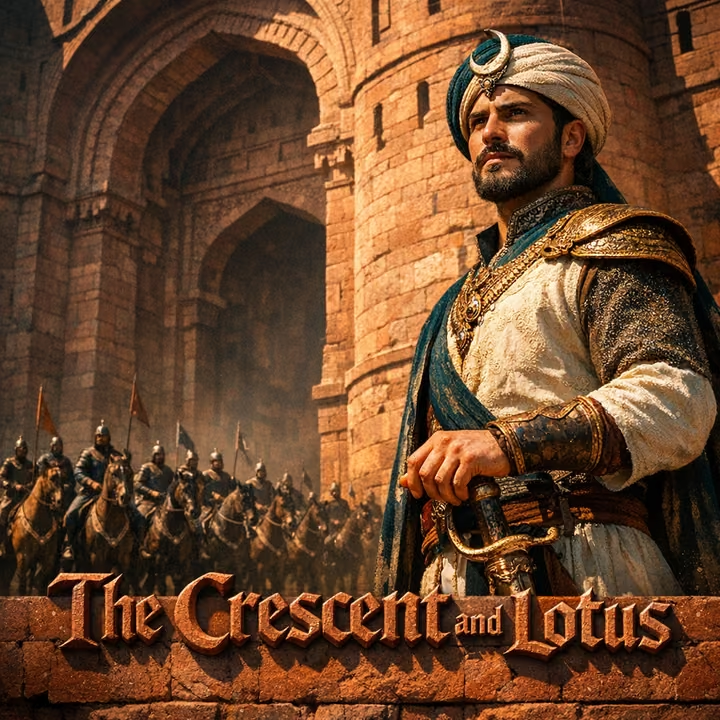
The Crescent and Lotus
The year is 1705. The Mughal Empire is dying. Aurangzeb — the emperor whose iron fist held together the greatest empire Asia had ever seen — is retreating from a war....
The year is 1705. The Mughal Empire is dying. Aurangzeb — the emperor whose iron fist held together the greatest empire Asia had ever seen — is retreating from a war he cannot win. His sons circle like vultures over a carcass that still breathes. Every general, every noble, every foreign power from Britain to France to Persia is already calculating what they will carve from the corpse. They are all wrong. Because the youngest son — the one they dismissed, the one they exiled, the one whose name Aurangzeb never spoke without contempt — is watching. And waiting. And thinking thoughts that no Mughal emperor has ever thought before. On 4 March 1707, Muhammad Akbar II seizes the throne of the Indian Empire. He is not his father. He is not his grandfather. He is something the subcontinent has never produced before and will never produce again — a Mughal emperor who believes that every religion is true, every language is sacred, every person regardless of faith deserves equal dignity under law. He abolishes the jizya. He opens the army to every caste and community. He writes letters to the French king proposing a friendship that will last longer than either of their dynasties. The British call him naive. The British are wrong about that too. What follows is three centuries of a story that will make you question everything you thought you knew about power, civilisation, and what India could have been.