
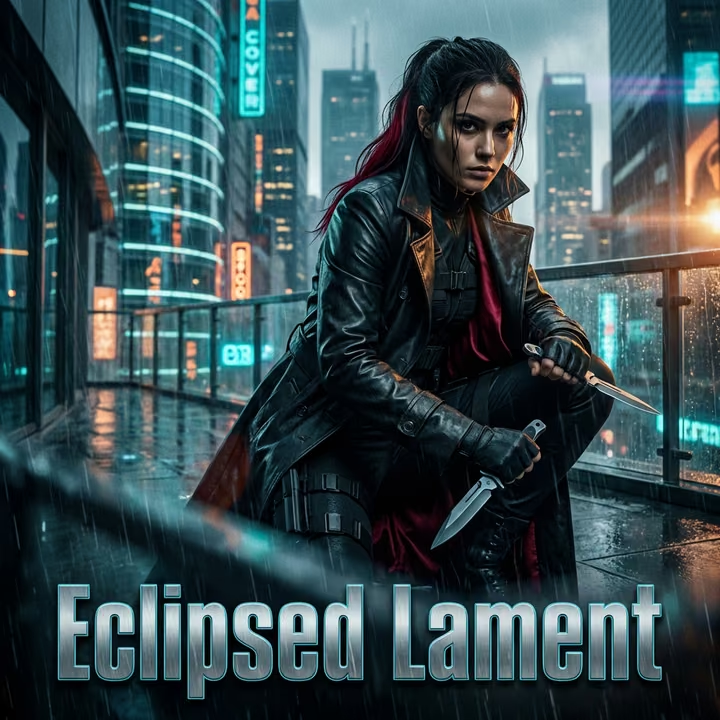
Eclipsed Lament
In a world veiled by shadows, where cities gleam with neon reflections on rain-slicked streets and towering skyscrapers seem to pierce the clouds themselves, the line between predator and prey....
In a world veiled by shadows, where cities gleam with neon reflections on rain-slicked streets and towering skyscrapers seem to pierce the clouds themselves, the line between predator and prey is invisible, and only the trained can navigate it. This is the world of Crimson Eclipse, a clandestine society of elite assassins whose lives are defined by discipline, precision, and the systematic eradication of human error. The manga’s aesthetic draws heavily from dark anime influences, blending hyper-realistic urban environments with stylized, fluid combat choreography; wet asphalt reflects fractured lights, neon advertisements flicker like distant warnings, and interiors of high-security buildings are rendered with obsessive detail, every shadow a potential weapon. Among these flawless killers is P1 — Revena Kurenai, a young but supremely skilled operative whose calm crimson eyes and black hair streaked with blood-red signal her lethal presence. Initially, she moves within the rigid structure of Crimson Eclipse, executing contracts with a precision that borders on art, turning every mission into a study of geometry, timing, and psychological manipulation. Yet beneath her measured motions and disciplined mindset, the cracks of human imperfection begin to emerge, not as empathy or guilt, but as an understanding of weakness — in others and eventually, in the system itself. As Revena meticulously climbs through her missions, the story begins to diverge from a traditional assassin tale: betrayal becomes inevitable. She abandons loyalty to her squad and to the shadowy Obsidian Court that controls the assassin world, becoming the Eclipse Hunter, a single-minded predator who methodically dismantles the very organization and peers that trained her. Her transformation is reflected in the manga’s visual storytelling: the choreography of her fights becomes more ruthless, her presence more ominous, and the anime-style panels highlight the contrast between human frailty and calculated lethality, often freezing moments to emphasize the tension between movement, silence, and impending violence. Beyond the killings, the world is alive with multiple layers of intrigue: rival assassin factions like the Velvet Fang and the Iron Requiem, shadowy elite police units like the Aegis Division, and detectives chasing fragments of a truth that threatens to unravel both the criminal and legal structures of society. Every encounter becomes a chess match, a collision of strategy, speed, and perception, and Revena’s growing detachment from humanity ensures that nothing can predict her next move. Ultimately, Crimson Eclipse is a meditation on control, perfection, and the cost of ambition, blending the aesthetic sensibilities of anime — dramatic lighting, sweeping cityscapes, expressive character angles — with the relentless tension of a world where emotions are weaknesses, trust is a liability, and one assassin’s desire for absolute supremacy could collapse an entire shadowed society.