
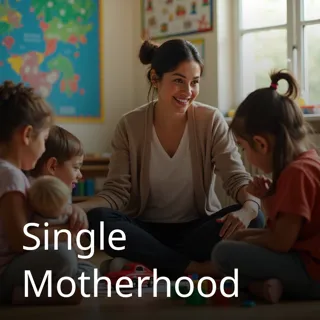
Single Motherhood
Single motherhood is influenced by various factors, including economic shifts, family structures, and policies, leading to diverse experiences and opportunities.Single mothers often manage multiple roles without much support, with demographics varying by age, ethnicity, and location. Its not just a personal choice but reflects broader societal trends, with some communities being more accepting due to cultural norms and economic factors. Economic hardship can lead women to bear the full financial burden of raising children alone, though some may have access to better safety nets.Single motherhood is more common than many realize, with many single mothers balancing work, household chores, and child-rearing simultaneously. In the United States, about 23% of children live with a single mother, highlighting the prevalence of this lifestyle.Most single mothers are under thirty-five, but older women also raise children alone due to various reasons such as divorce, separation, widowhood, or personal choice.Understanding the statistics and demographics of single motherhood is essential for community and policy-level awareness and support.This book attempts to balance the day to day life experiences with the prevailing mixed global conception on single motherhood.I hope on reading through this book,you too will join to advocate for better welfare for single mothers globally.
Disclaimer: This show may contain expletives, strong language, and mature content for adult listeners, including sexually explicit content and themes of violence. This is a work of fiction and any resemblance to real persons, businesses, places or events is coincidental. This show is not intended to offend or defame any individual, entity, caste, community, race, religion or to denigrate any institution or person, living or dead. Listener's discretion is advised.Less