
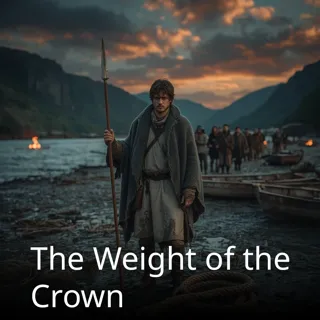
The Weight of the Crown
“The Bad King” drama is about how power is abused, lost, and—if people are careful—relearned. It’s not really about one king. It’s about a pattern. Here’s what the drama is truly about, in simple terms: The Rise of the Bad King The king believes ruling means control. He uses fear, punishment, and silence to stay in power. Over time: Advisors disappear People stop speaking honestly Suffering grows unnoticed The drama shows how tyranny often doesn’t start with cruelty—it starts with refusing to listen. The Quiet Collapse There is no great rebellion at first. Instead: People stop asking for help Communities adapt without the king The ruler becomes irrelevant This is the core dramatic tension: a king losing power not through violence, but through neglect and isolation. The Turning Point When the king finally sees the damage he caused, he faces a choice: Reclaim power through force Or step down and learn humility The drama centers on whether a person who abused power can change—and whether change is enough. The Bigger Conflict After the king fades, the real drama begins: Can people govern themselves? What happens when fear returns? Will they repeat the same mistake under a new name? The crown becomes a symbol of temptation—easy answers in hard times. The Message The drama argues that: Bad kings don’t exist alone—they are enabled Silence is more dangerous than rebellion Freedom requires memory, effort, and participation In one line: “The Bad King” is a drama about how societies trade responsibility for comfort—and what it costs them when they do. “The Bad King” as a Psychological Drama Seen psychologically, the drama is about the inner life of power—how control reshapes identity, perception, and moral responsibility, both in one man and in the people around him. The Bad King: A Mind at War With Vulnerability Halveth is not driven by cruelty alone. He is driven by fear of uncertainty. Psychologically: He equates silence with safety He avoids dissent because it creates anxiety He confuses control with stability The palace walls and harsh laws are extensions of his psyche: rigid, defensive, and isolated. As dissent disappears, so does reality. The king slowly loses the ability to perceive truth—a classic authoritarian blind spot. Silence as a Trauma Response The people don’t rebel at first because they are conditioned. Speaking once caused harm So they adapt by withdrawing Survival replaces resistance This mirrors real psychological responses to prolonged control: learned helplessness gives way to quiet autonomy. The king interprets this as success, but it is actually emotional abandonment. The Moment of Collapse: Identity Without Power When Halveth walks among the people in disguise, he experiences ego death: No recognition No fear No obedience Without power reflected back at him, his identity fractures. This is the drama’s core psychological moment: Who am I if no one needs me? Guilt vs. Responsibility Halveth does not seek redemption through forgiveness. Instead, he accepts moral responsibility without control. Psychologically, this is growth: He stops needing dominance to feel whole He tolerates uncertainty He listens rather than commands This marks the shift from narcissistic authority to integrated selfhood. The Collective Psyche: Repeating the Pattern Later chapters show the people facing the same psychological temptation: Anxiety under stress Desire for a single decision-maker Nostalgia for simplicity The crown represents projection—the belief that someone else can carry the burden of uncertainty for us. Breaking the crown is a symbolic refusal to outsource responsibility. Final Psychological Thesis The Bad King is a drama about how fear distorts perception, how silence erodes reality, and how maturity—individual and collective—requires tolerating uncertainty instead of dominating it. In one sentence: The story asks whether we can live without giving our anxiety to someone else—and what it costs us when we do. that's
Disclaimer: This show may contain expletives, strong language, and mature content for adult listeners, including sexually explicit content and themes of violence. This is a work of fiction and any resemblance to real persons, businesses, places or events is coincidental. This show is not intended to offend or defame any individual, entity, caste, community, race, religion or to denigrate any institution or person, living or dead. Listener's discretion is advised.Less