
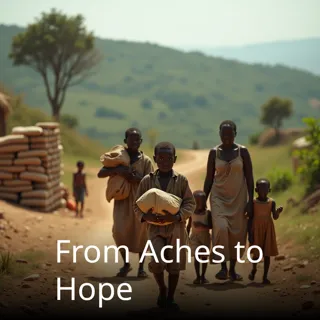
From Aches to Hope
SERIES DESCRIPTION LOGLINE When a brutal tribal conflict destroys his village, a resourceful 10-year-old Medumba boy must lead his three younger siblings across Cameroon on a harrowing odyssey, where an act of mercy from a Muslim stranger challenges everything he knows about family, faith, and home. --- TITLE THE BANGANGTE BOY: FROM Aches to Hope GENRE & TONE · Primary Genre: Epic Family Drama / Survival Saga · Secondary Genres: Historical Fiction, Spiritual Journey, Sociopolitical Drama · Tone: Gritty yet hopeful, emotionally raw, culturally immersive, spiritually resonant · Comparables: The Walking Dead (family survival unit under constant threat), The Kite Runner (childhood trauma and redemption across borders), Slumdog Millionaire (resourceful child navigating harsh realities), The Book of Negroes (epic journey shaping identity) --- CORE THEMES 1. The Redefinition of Family: Exploring how family is forged not just by blood, but by shared sacrifice, mercy, and chosen bonds. 2. The Cost of Conflict: A microcosm of tribal and political strife, showing how wars shatter the innocent and scatter communities. 3. Faith as a Compass: A nuanced portrayal of Islam not as an abstract doctrine, but as a practical, lived ethics of charity, community, and resilience in the face of trauma. 4. The Immigrant’s Journey: The universal story of displacement, otherness, and the struggle to build a new identity while honoring one's roots. 5. Intercultural Dialogue: A deep dive into the complex mosaic of Cameroonian society—Bamiléké, Mankon, Fulani, Muslim, Christian, traditional—and the tensions and bridges between them. --- CHARACTER JOURNEY ARC ASA’A / YUSUF: Our protagonist. His journey is a triple transformation: · Physical: From a carefree boy climbing trees in Bangangte a hardened survivalist leading siblings through wilderness a displaced orphan in Bamenda an integrated member of the Old Town Muslim community a pioneering community leader in Ndop. · Cultural: From a Medumba-speaking, traditionally-rooted Bangangte native a traumatized refugee stripped of identity a willing convert to Islam, finding a new “language” of belonging a synthesis of all his identities: a Muslim leader who farms using his father’s techniques and mediates using wisdom from all his communities. · Spiritual: From a boy who listens to the spirit of the Nkeng tree a desperate child with no one to pray to a seeker inspired by observable grace a sincere convert whose faith is tested by new hardships a man whose faith becomes the foundation for building peace. THE SIBLINGS: Each represents a different response to trauma: · Babila (The Intellectual): Clings to books and facts as anchors in chaos. His journey is toward applying his intellect to practical survival and community building. · Kwen (The Fighter): Her fiery spirit, once used for sibling rivalry, becomes fierce protectiveness and relentless resilience. · Nani (The Innocent): The most fragile, embodying the pure cost of the conflict. Her survival becomes the family’s central motivation. THE COMMUNITIES: · Bangangte: Represents Roots – tradition, belonging, and the paradise lost. · Mankon (Bamenda): Represents Tribal Rejection – the cruelty of being an “internal outsider.” · Old Town Muslims: Represents Grace-Based Community – family chosen through compassion and shared principle. · Ndop: Represents The Frontier – the challenging space where a new, syncretic identity must be built from scratch. --- NARRATIVE SCOPE & SCALE · Geography: A literal traverse across Cameroon’s diverse landscapes—from the lush, rolling hills of the West Region, across the vast Ndop Plain, into the misty, conflicted mountains of the Northwest. · Cultural Landscape: An authentic, detailed exploration of languages (Medumba, Pidgin, Mankon, Ngomba, Arabic), customs, food, social structures, and religious practices. · Historical Context: Set against the backdrop of real, simmering inter-triba
Disclaimer: This show may contain expletives, strong language, and mature content for adult listeners, including sexually explicit content and themes of violence. This is a work of fiction and any resemblance to real persons, businesses, places or events is coincidental. This show is not intended to offend or defame any individual, entity, caste, community, race, religion or to denigrate any institution or person, living or dead. Listener's discretion is advised.Less