
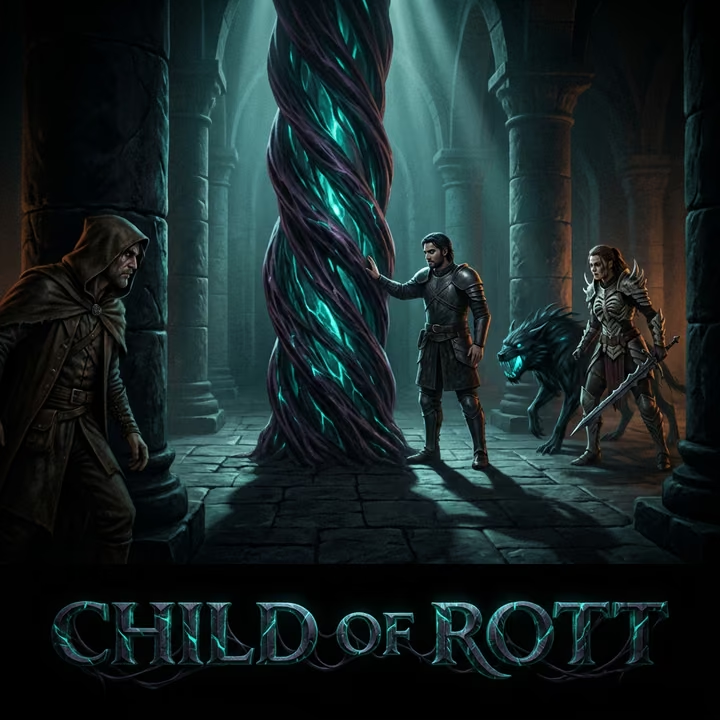
Child of Rott
It’s a dark fantasy political-war arc set mostly around Velshara, where power isn’t just a throne and an army, it’s an operating system. Norank is building a rigid Shadow Code....
It’s a dark fantasy political-war arc set mostly around Velshara, where power isn’t just a throne and an army, it’s an operating system. Norank is building a rigid Shadow Code to replace the Spider-era rot, and he’s doing it like a cold, competent tyrant who genuinely believes order is mercy. The catch is his patron is a shadow god that doesn’t “bless” him so much as rewrites him, turning him into living infrastructure: omnipresent reach, remote force, total surveillance, and a life-force tethered to the stability of the empire. The more he expands, the more powerful he gets… and the more he becomes dependent on the structure not collapsing. Power as a leash. The core drama is a triangle of pressure. Riot is Norank’s bound shadow, devotion incarnate, emotional and possessive, the kind of loyal monster who wants to solve politics with teeth. Serathra Veyl (daughter of war and corruption) is discipline incarnate, a strategist-war engine who treats conquest like architecture. She pushes Norank from “authoritarian stabilizer” into “imperial expansion,” and she keeps winning, which creates a subtle threat: people admire inevitability more than they admire law. Norank has to decide whether he can tolerate being outperformed without resorting to ego and punishment. Then there’s Kael, the rogue anomaly. He’s not leading a rebellion (yet). He’s a pressure point and mirror who understands systems and refuses co-option. He destabilizes Norank not by armies, but by telling the truth in a way tyrants can’t comfortably ignore: durable structures either incorporate anomalies or crush them. Kael also uncovers the deeper mechanical horror: the empire’s “shadow reach” is anchored somewhere under the city, and if that anchor breaks, Norank breaks. So the book’s tension isn’t “can they win wars,” it’s “can the ruler survive the consequences of winning.”